
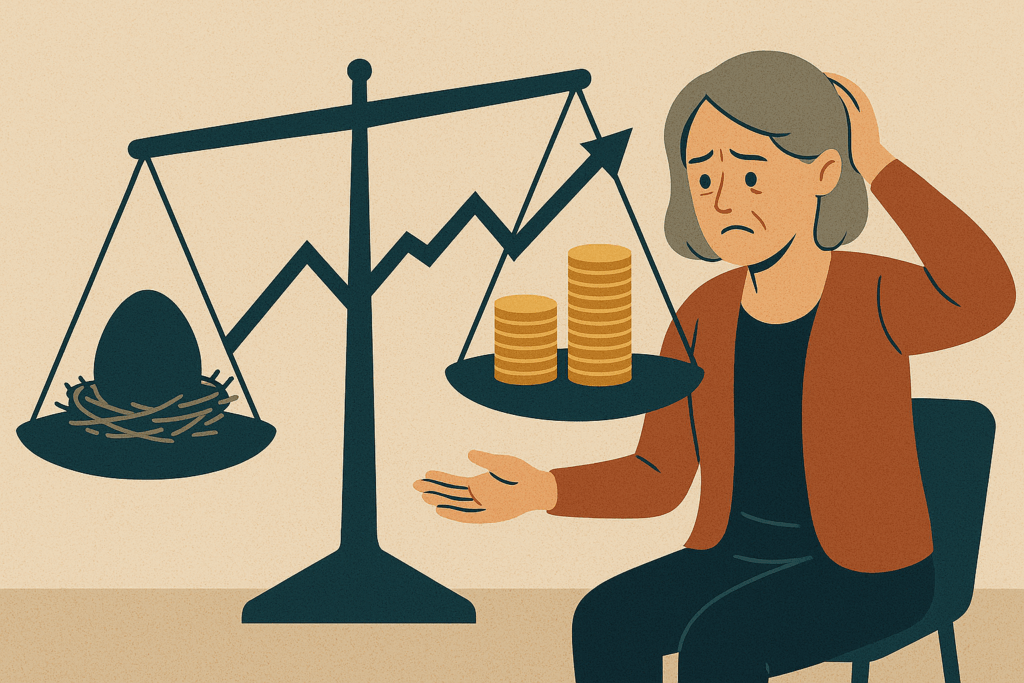
Many retirees assume their portfolios are “conservative,” but without a proper risk assessment, they may be exposed to more downside than they’re comfortable with. That blind spot can lead to more than just stress — it can have long-term financial consequences that affect your income, lifestyle, and legacy.
At Financial Services of America, we help clients identify how much risk they’re actually taking — not just what they believe they’re taking. And for those in or nearing retirement, that clarity can make all the difference.
Why Risk Measurement Matters More Now Than Ever
The stock market has performed well over the past decade — but history reminds us that it doesn’t go up forever. In retirement, you’re not just investing for growth — you’re depending on those assets for income. That makes understanding and managing downside risk essential.
Unlike younger investors, retirees don’t have time on their side to recover from large losses. Your strategy shifts from building your nest egg to preserving it and using it wisely. That’s why proper risk alignment becomes so important.
What Real Retirement Risk Looks Like
We often meet individuals who believe they’re in a low-risk portfolio — but when we review their actual holdings, the potential downside in a market correction tells a different story.
They’re not necessarily making high-risk decisions on purpose. In many cases, the risk has crept in over time through a mix of overlapping mutual funds, overexposure to specific sectors, or changes in the market environment.
The problem isn’t always exposure. It’s unawareness.
What True Risk Assessment Involves
Correlation between your investments — Just owning multiple funds doesn’t mean you’re diversified. If your funds hold similar stocks (like tech-heavy names), they can all move the same way — which increases risk.
Performance during past downturns — Looking at how your investments fared during real stress periods can reveal hidden vulnerabilities.
Volatility — If your portfolio frequently fluctuates by large amounts, it may cause stress — and potentially emotional decision-making — during retirement.
Downside risk — This is your realistic worst-case scenario. Understanding the potential for temporary losses, especially when you’re drawing income, is key to avoiding long-term impact.
Risk-adjusted return — It’s not just about what you earn — it’s about whether the return justifies the risk you’re taking. If you’re exposed to steep losses without proportionate gains, it’s worth revisiting your strategy.
The Consequences of Misaligned Risk
Risk doesn’t just live in your investment account — it ripples through your entire retirement lifestyle. Consider the potential impact of unmanaged risk:
Here’s how:
Forced lifestyle changes: A sharp market drop may lead to reduced spending, postponed travel, or financial anxiety.
Sequence of returns risk: Withdrawing during a down market can lock in losses and shrink future income potential.
Emotional toll: Uncertainty in the markets can lead to sleepless nights or even strained relationships.
Legacy erosion: Large losses can reduce the assets available for heirs or charitable goals.
Common Risk Blind Spots in Retirement
Here are a few often-overlooked risks:
Target-date funds: These can carry more market exposure than expected, even near the retirement date.
Overlapping mutual funds: Owning multiple funds with similar top holdings reduces diversification.
Concentrated positions: Holding too much of one stock or sector increases exposure.
Long-duration bonds: These can decline in value if interest rates rise.
Emerging market or aggressive international exposure: These can create unwanted volatility for conservative investors.
When Should You Reassess Risk?
Annually, as part of your overall retirement review
Before retirement, to align your income strategy with market risk
After big market movements, up or down
Following life changes, such as retirement, business sale, or major health events
Anytime you feel uncertain, or are making major investment changes
What You Can Do to Better Align Your Portfolio With Your Goals
If you’re unsure whether your portfolio matches your risk comfort level, here are some practical strategies to consider:
Diversify smarter: Go beyond stock/bond allocations — include a mix of asset classes, sectors, and investment types.
Focus on income: Build a strategy designed to generate consistent, reliable income regardless of market conditions.
Protect your principal: Use tools that limit downside exposure while offering potential for growth.
Segment by time horizon: Organize your assets by short-, mid-, and long-term needs with risk-appropriate investments for each.
Create guaranteed income streams: Leverage strategies like Social Security optimization and other guaranteed income tools where appropriate.
Risk Management = Peace of Mind
The ultimate goal isn’t just reducing numbers on a statement — it’s preserving your lifestyle, your independence, and your sense of confidence.
A portfolio that’s properly aligned with your comfort level and retirement goals can help you stay the course during turbulent markets and avoid emotional decisions that could derail your plan.
Take the Next Step
If you’re unsure how much risk you’re taking — or whether it aligns with your stage of life — now may be the right time for a second look.
You’ve worked hard to build your retirement savings. Let’s make sure they’re structured to last — through every market cycle.