
May 26th, 2026 — Financial scams are evolving rapidly, and many retirees are now being targeted in ways that look far more convincing than in the past.
Artificial intelligence has made it easier for scammers to imitate real people, create believable messages, and pressure individuals into making emotional financial decisions quickly. What once looked like obvious fraud may now appear surprisingly realistic.
For retirees, staying informed about these scams may help reduce the risk of financial loss, identity theft, and unauthorized account activity.
Why Retirees Are Often Targeted
Scammers frequently target retirees because many individuals nearing or in retirement:
- Have accumulated savings over time
- Own retirement or investment accounts
- May be less familiar with newer AI technologies
- Are more likely to answer phone calls, emails, or text messages
According to the FBI’s Internet Crime Complaint Center, older Americans continue to report some of the highest financial losses related to fraud and cybercrime each year¹.
As technology continues evolving, scammers are becoming more sophisticated in how they approach potential victims.
What Are AI Scams?
AI scams use artificial intelligence to imitate voices, messages, images, or even real-life situations.
Many scams are designed to create urgency and emotional pressure before someone has time to verify the information.
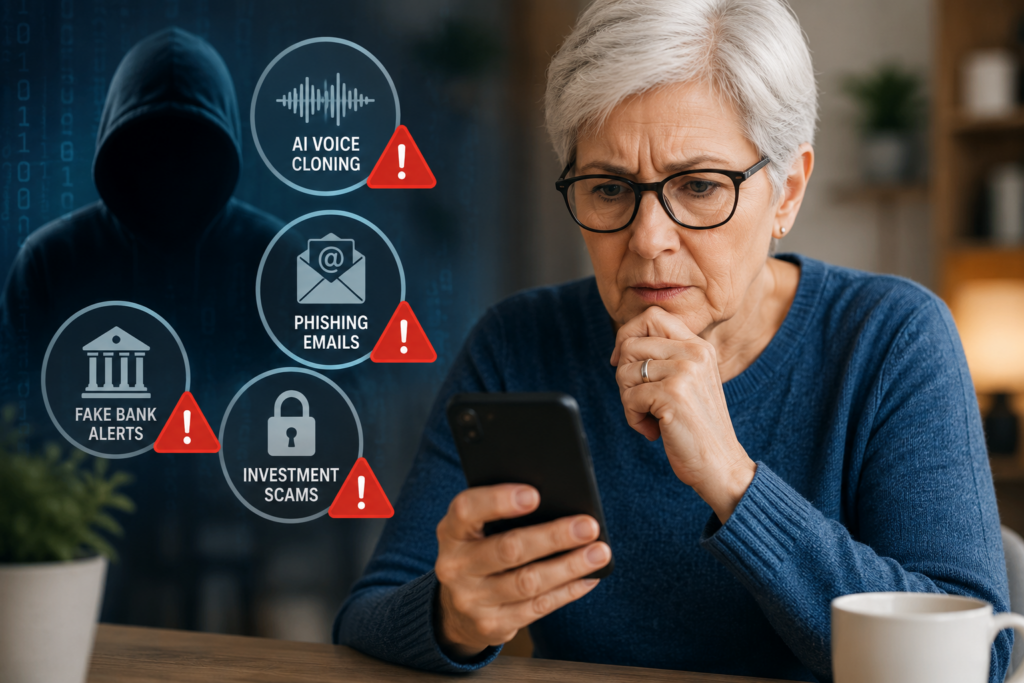
Common examples include:
- AI voice cloning scams
- Fake banking alerts
- Fraudulent Medicare or Social Security messages
- Phishing emails requesting account verification
- Fake investment opportunities
Some scams now sound so realistic that individuals may believe they are speaking directly with a family member or financial institution.
AI Voice Cloning Scams Are Becoming More Common
One growing concern involves AI voice technology.
Scammers may use short voice samples taken from social media videos, online recordings, or voicemail messages to imitate someone’s voice. In some situations, retirees receive phone calls from someone who appears to sound exactly like a child, grandchild, or family member².
These calls often involve:
- Emergency requests for money
- Claims of legal trouble
- Medical emergencies
- Urgent wire transfer requests
Because the calls sound emotionally believable, they can create panic before facts are confirmed.
Fake Emails and Financial Messages Have Become More Convincing
Phishing scams are also changing.
Older scam emails were often easier to recognize because of spelling mistakes or suspicious wording. AI-generated phishing messages now appear more polished and personalized.
Some messages may:
- Claim suspicious banking activity
- Ask you to reset account passwords
- Request Medicare or Social Security verification
- Direct users to fake login pages
Investment Scams Continue Targeting Retirees
Investment-related scams remain one of the biggest concerns for retirees.
Some fraudulent offers may promise:
- Guaranteed retirement income
- Risk-free investments
- Fast recovery from market loss
- High returns with little risk
These types of claims can become especially appealing during periods of market volatility or economic uncertainty.
The U.S. Securities and Exchange Commission continues warning investors about fraudulent schemes specifically targeting older Americans³.
How Retirees Can Help Reduce Scam Risk
While scams continue evolving, there are several practical steps retirees can take to help protect themselves.
Pause Before Acting
Scammers often rely on urgency. Taking time to verify information may help prevent emotional decisions.
Verify Requests Independently
If someone claims to represent a family member, bank, Medicare, Social Security, or financial company, contact the organization directly using a trusted phone number or website.
Avoid Clicking Suspicious Links
Emails and text messages may contain fake websites designed to collect passwords or personal information.
Monitor Financial Accounts Regularly
Reviewing accounts activity consistently may help identify unusual transactions earlier.
Limit Personal Information Online
Voice recordings, videos, and publicly shared information may sometimes be used in AI-related scams.
Why Staying Informed Matters
One of the biggest challenges with AI scams is how realistic they can appear.
Many scams no longer resemble the obvious fraud attempts people may remember from years ago. Artificial intelligence allows scammers to create more believable conversations, emails, and situations that may appear legitimate at first glance.
Understanding how these scams work can become an important part of protecting retirement savings and personal information over time.
Financial Security Involves More Than Investments
Retirement planning is not only about growing assets. It also involves helping preserve the financial foundation you’ve worked hard to build.
At Financial Services of America, we believe education and awareness play an important role in long-term financial confidence. Staying informed about changing financial risks may help retirees make more informed decisions moving forward.
Next Steps
As technology continues evolving, financial scams will likely continue evolving as well.
If you have questions about protecting retirement accounts, reviewing financial activity, or strengthening your overall retirement strategy, our team is here to help guide you through the conversation.
Sources
¹ Federal Bureau of Investigation. Internet Crime Report 2025. FBI Internet Crime Complaint Center (IC3),
https://www.ic3.gov/Media/PDF/AnnualReport/2025_IC3Report.pdf.
² Federal Trade Commission. Scammers Use AI to Enhance Their Family Emergency Schemes. Federal Trade Commission,
https://consumer.ftc.gov/consumer-alerts/2023/03/scammers-use-ai-enhance-their-family-emergency-schemes.
³ U.S. Securities and Exchange Commission. Investor Alert: Protecting Older Investors. Investor.gov,
https://www.investor.gov/protect-your-investments/fraud/types-fraud/affinity-fraud.